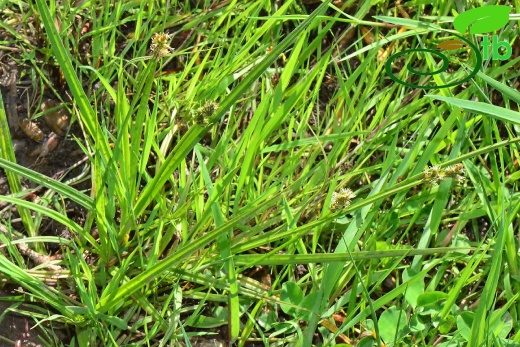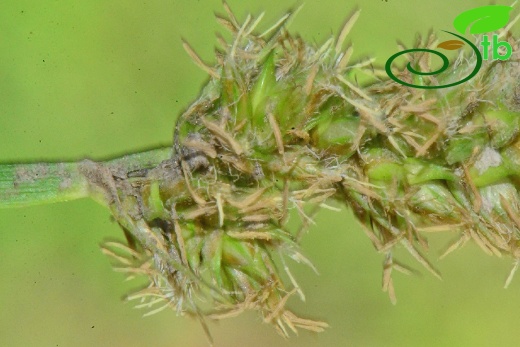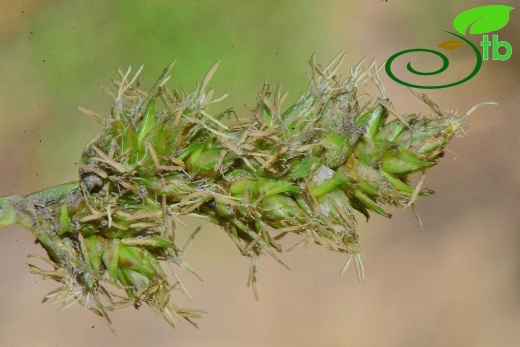

Carex muricata
Carex muricata
Subsp. ashokae: Kanca ayakotu; Subsp. muricata: Çengelsazı
Syn: C. vulpina
Similar to C. spicata but roots blackish-brown; basal sheaths often strongly fibrous, brown to blackish-brown; stems 10-45 cm, rather slender; leaves usually distinctly shorter than stems; ligule c. as broad as long, forming low semicircle; inflorescence shortly cylindrical, usually dense with ± confluent spikes above, lowest 1-2 spikes sometimes slightly distant but not more than their own length apart; spikes ovoid to almost globular, usually simple and all sessile; female glumes pale to dark reddish-brown, c. as long as utricles; utricles pale yellowish- to usually blackish-brown when ripe, ovate, 3-4.2 mm, patent to erecto-patent, rather indistinctly veined to almost veinless, base rounded or truncate, not spongy or thickened, apex rather abruptly contracted into short beak often cleft for more than half its length. Forest margins, meadows, often in rather dry places, sometimes a weed or casual by roadsides and in fields, s.l.-1200 m.
Most of Europe, Balkans, C. & S. Russia, Transcaucasia; distribution imperfectly known. Euro-Sib. element.